Does a Plant Need Water to Grow?

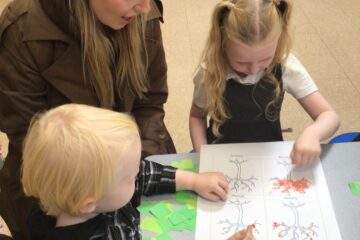
Year 1 have begun their new Science topic on plants with an exciting bean experiment to investigate whether plants need water to grow. Over this half-term, we will observe and record changes over time, just like real scientists, and discuss why careful observation is important. We started by drawing flowers Read more

Science – plants

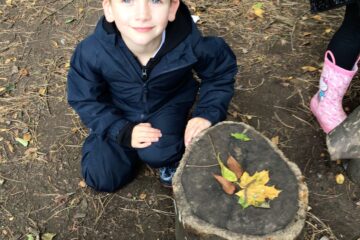
This half term, Year 1 learning all about plants! For our first lesson, we took part in a plant hunt, learnt about the different parts of a plants, what they need to survive and also completed an experiment using runner beans. We also then planted our own! We are going Read more

Week 6 Burp in a Bag!

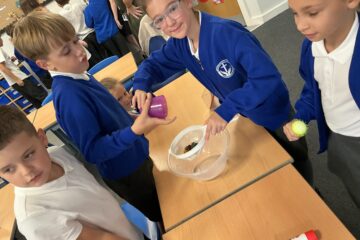
For week 6 of our exciting at-home science challenge some children have explored chemical reactions in a fun and memorable way. Using simple household ingredients, they created their very own “burp in a bag” experiment—and the results were both impressive and very loud! The experiment involved combining vinegar and baking Read more

Herbivore, Carnivore or Omnivore?

This week in science, we learnt all about animal diets. We explored three important terms: carnivores, herbivores, and omnivores. Carnivores are animals that eat meat, herbivores eat plants, and omnivores eat both plants and meat. Just like real scientists, we carried out our own research to learn more about what Read more

Scientific enquiry project

A group of Year 5 children have continued their scientific journey at Rochdale Town hall. We are involved in a project with other Rochdale schools to investigate an aspect of renewable energy. Our children have decided to try to answer the question: If our school was to buy solar panels, Read more

Lifecycle of a frog

Pine have learnt all about the lifecycle of an amphibian today. We have compared the lifecycles of different amphibians and played a leap frog game to test our knowledge. We discussed in groups how temperature may affect an egg hatching and worked scientifically by using data to draw conclusions.

Comparing Animals

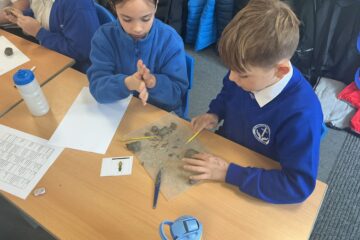
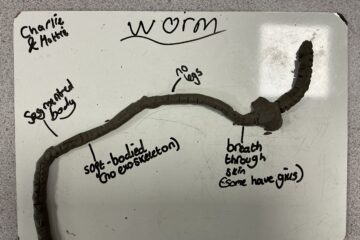
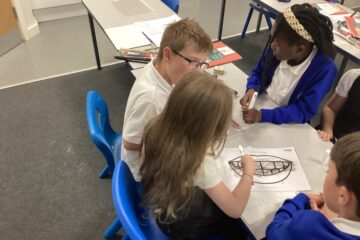
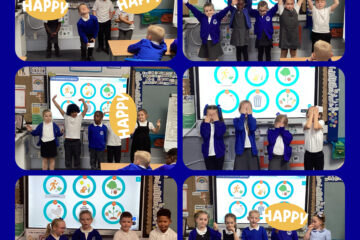
This fun and interactive lesson introduced children to animal body parts and how animals can be grouped by their features. Working in pairs, pupils acted out body parts from the Animal Body Parts presentation—such as tails, fins and trunks—while their partner guessed. They then extended their ideas by inventing actions Read more